

More Than a Winter Coat: The Hidden Functions of Horse Chestnut Bud Scales
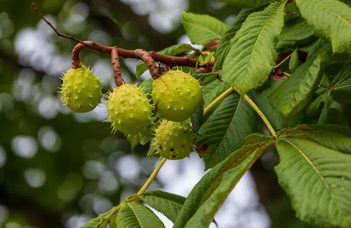
How do trees prepare for the explosion of spring while still locked in the icy grip of winter?
Researchers at ELTE Eötvös Loránd University and Semmelweis University have revealed that the sticky, brownish bud scales of the horse chestnut (Aesculus hippocastanum) are far more than just passive shields. In a study published in the Journal of Plant Physiology, the Hungarian research team demonstrated that these scales, traditionally viewed as inert "winter coats" for the developing shoot, actually harbor photosynthetically active chloroplasts throughout their entire lifespan.
In a study published in the Journal of Plant Physiology, researchers from the Department of Plant Anatomy at ELTE TTK, Katalin Solymosi and Enkhjin Enkhbileg, a doctoral candidate, along with Anna Skribanek, a researcher at the Department of Biology at the ELTE Savaria University Center, and Imre Boldizsár, a researcher at ELTE and Semmelweis University, demonstrated that the bud scales of the horse chestnut (Aesculus hippocastanum)—which are traditionally regarded as an inactive “winter coat” protecting developing shoots—actually contain photosynthetically active chloroplasts throughout their entire life cycle.
Bud scales are modified leaves that surround and protect the still-fragile leaf and shoot primordia formed for the following year from frost, desiccation, and herbivores. Although their protective role has long been known, researchers have known surprisingly little about their internal processes and physiological functions until now.
“I first began uncovering the secrets of buds and bud scales as a doctoral candidate in Professor Béla Böddi’s research group,” recalls Katalin Solymosi, the study’s last author, describing the background of the research. – “Our earlier studies provided only snapshots of winter and spring conditions. Now we have tracked the development and function of bud scales throughout their entire life cycle, from their formation in late May to their aging and shedding following the next year’s bud break.”

Figure 1. The study species, horse chestnut (Aesculus hippocastanum L.), and the bud structures examined in this research. Horse chestnut tree near the university campus (left, upper panel). Closed dormant winter buds (top center). Slightly swollen bud on a twig at the beginning of bud break (top right). Breaking bud showing its dimensions next to a ruler (center right). Autumn bud scale layers dissected and arranged in order next to a ruler, illustrating their number, size, and organization (bottom).
Based on the results, these leaves do not become completely inactive even in winter: even during the harshest period, they retain their functional photosynthetic apparatus and serve as a metabolic reserve that supports the rapid spring growth of the plant’s leaves.
Naked or Covered: That is the Question
The researchers observed a sophisticated “division of labor” among the bud’s different layers. The outer, brown scales primarily serve mechanical, thermal, and light-protective functions: they act as strong light filters and provide protection for the inner tissues. In contrast, the inner, thinner, and greenish scales maintain their higher chlorophyll content and low but stable photosynthetic activity even during the winter dormancy period.
“Bud scales are often considered inactive and non-photosynthetic organs, but our research shows that they perform multiple functions and actively contribute to the plant’s physiological processes through photosynthesis,” —says Enkhjin Enkhbileg, a Ph.D. student at ELTE and the study’s first author, summarizing the main message of the research.
According to researchers, the chloroplasts found in the inner scales rapidly regain their full activity during bud break, thereby providing energy to the developing shoots at the time when the plant needs it most.
The Sticky Science of Chemical Defense
Beyond their solar capabilities, the horse chestnut buds are famous for their sticky resin which might also inspire the development of biomimetic pressure-sensitive adhesives. Using high-resolution liquid chromatography-mass spectrometry (HPLC-UV-HRMS), the team characterized this resin in detail for the first time, identifying 15 distinct chemical constituents. The resin is dominated by methoxylated flavonols, which act as a sophisticated chemical shield against UV radiation and pathogens.
The study found that these compounds, including rhamnocitrin and various methylated quercetins, provide an antioxidant and antimicrobial barrier that complements the physical protection of the scales. This multilayered defense system (physical, thermal, light-shielding and chemical) ensures the survival of the tree’s future leaves and flowers through the most unfavorable conditions.

Figure 2. Resin secretion, bud scale anatomy and chloroplasts of developing summer horse chestnut buds. Young bud fully covered with sticky protective resin (left). Light microscopic image of the trans section of a bud scale showing resin-producing multicellular secretory structures called colleters (black arrowhead) responsible for secreting the resin that coats and protects the developing bud (center), chloroplast present in the central region of the bud scale (right) with typical photosynthetic membrane structure, a granum (white asterisk). Scale bars: 5 mm (left), 100 µm (center) and 1 µm (right).
What Else Can Bud Scales Teach Us?
The research used a combination of bright-field microscopy, transmission electron microscopy (TEM), analyses of the pigments and their organization, as well as chlorophyll fluorescence imaging to track these changes across all four seasons. They found that while the chloroplasts in the outer scales eventually undergo senescence after bud break, the inner scales remain active longer, supporting the early growth of the emerging shoot.
Understanding these fundamental survival strategies is not just about appreciating the secret life of ornamental trees and their leaves. The mechanisms that allow horse chestnut buds to maintain their photosynthetic machinery during dormancy could offer key insights for agricultural science. As climate change increases the frequency of extreme winter and spring weather, understanding how plants "metabolically hibernate" could contribute to breeding more resilient and climate-adapted crop species.
Data of the published paper: Enkhjin Enkhbileg, Anna Skribanek, Imre Boldizsár, Katalin Solymosi (2026) Horse chestnut (Aesculus hippocastanum L.) bud scales harbor photosynthetically active chloroplasts during their entire lifespan. Journal of Plant Physiology 154819.
This work was financed by the OTKA grant K-135712 of the National Research, Development and Innovation Office (to I.B.). Authors are grateful for the support of the Bolyai János Research Scholarship of the Hungarian Academy of Sciences (to K.S.), the Stipendium Hungaricum Ph.D. Scholarship of Tempus Public Foundation and the EKÖP-24-3-II university doctoral research scholarship program of the Ministry for Culture and Innovation from the source of the National Research, Development and Innovation Fund (to E.E.).